
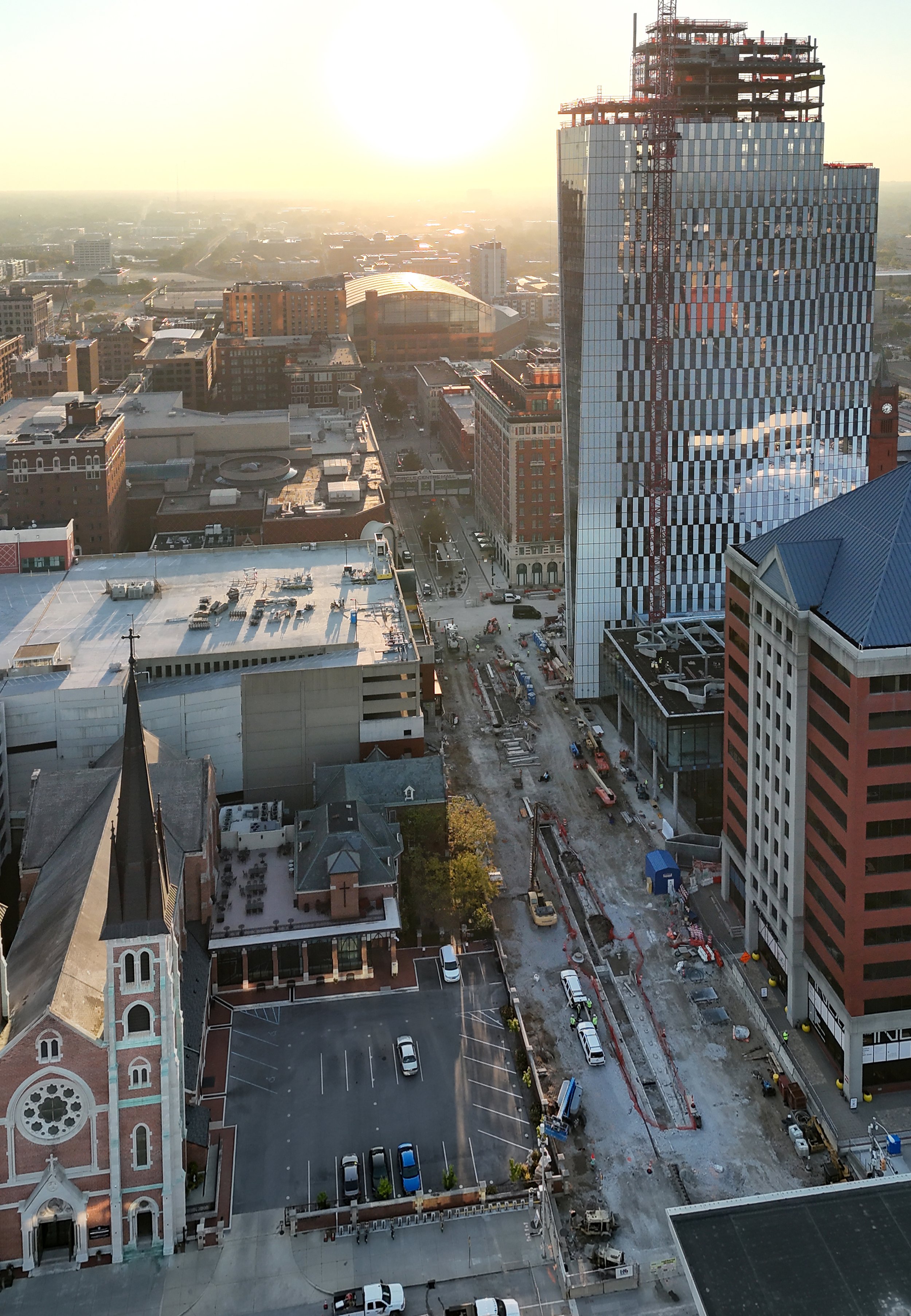
We were recently featured in Fast Company with 10 other designers discussing what needs to be redesigned in 2026. With development happening across the country focused on new sports and entertainment districts, we think about a people-first, human-scaled, every-day approach to design. You can read more below. The full article is availble here.
In the late ’90s and early 2000s, large-scale entertainment and sports districts were built in cities across America. These areas were designed with one very lucrative function in mind: to cater to massive crowds of sparsely scheduled mega events. But the other hundreds of days a year, these spaces sit largely empty with limited activity or use.
Today we have an opportunity to redesign these districts so that they not only accommodate dynamic, memorable, and safe experiences around game days, concerts, and conferences, but also support people who want to sit with a coffee in the middle of a Tuesday or meet friends for a live performance, art class, or outdoor movie screening on the weekend.
To do this, we need to introduce flexibility and comfort. Multi-purpose plazas can cater to large events but also provide comfort day-to-day with furniture and features that serve many purposes. Imagine a large plaza designed for a tailgating crowd but also designed to transform with lots of moveable furniture under a shaded tree canopy for gathering on a non-event day. Stepped wooden platforms can be used as a stage or also for seating or play. Wide sidewalks with large trees for shade and street furniture (e.g. benches, planters, bike racks, lighting) create great urban streets while also being designed for crowd security and protection.
As we head into a multi-year period of American cities preparing for mega events like the World Cup, the Olympics, and the 250th anniversary of the signing of the Declaration of Independence, designers working on event spaces should remember that the motivation to rehabilitate these places shouldn’t be either function for large events or daily life. It’s both. Enduring urban spaces should be able to do it all.